Tuesday, March 24, 2009

One Line Project Plans. Makes for Higher Performing Organisations

When I talk to people about using Microsoft Project as a great tool which can save managers an awful lot of time and bring valuable MI into the organisation at low cost, some (many/most?) share back with me how their experience with Microsoft Project was not satisfying. Often that experience is based on one or two examples--after which they abandoned the tool. The common themes that emerge:
  • "When we used it, the project plans ran to scores of pages with hundreds of tasks and we didn't have a clue about what was going on".
  • "Project gives funny answers. " they say.
  • Those who don't use Project because of these issues, then report proudly how they keep it "simple" by using Excel and, if they use Project it's only to do a Gant Chart that they paste into PowerPoint.
I respond by saying "Sound like self-inflicted complexity. That's not Project's fault. And "funny" answers is a clue about possible deficiences in the plan. Project, far as I know, has very few--if-any--calculation bugs. In any event, Excel is hardly simple as it's no better than a blank sheet of paper. Programming complex project management algorithms in Excel is always complicated and error-prone. "

"Keep it simple and enjoy complex benefits. Why don't you simply require your organisation to have for each "project" one-line plans in Microsoft Project?"

That floors them. "That can't possibly be enough detail", I hear.

I think that level of detail for most organisations is much better than projects with hundreds of trivial or individually-managed tasks, or projects "planned in PowerPoint". Maybe once 1-line project plans are achieved, you can move on to 5 or 6 line project plans. But no more.

Here is an example.

See the screen shot where we have a project called "Project 6" with one task: "Do Project 6". This project is slated to start on 27th May 2008 and use four resources:

• 2 Geologists
• Half of James Roberts' time
• A small amount of Susie Thomas's time
• A little less than half of Anne West's time

Project computes the total cost, based on the billing rates for the above people, to be £133k.


But this isn't the only project or activity being done by the organisation. There are many more, and nicely each has their own one-line model. The following shows how all these line projects are pulled together into a single view in a master project

They now don't have just a simple one-line project, but they have a much richer understanding of eight activities, all which have time demands on the organisation. Without going into all the details here, you now have all the capabilities of Project go look at deadlines, milestones, resource planning, etc.

So what other benefits do we get by doing this simple project setup in a complex product like Microsoft Project:
  • Project handles all the complicated time-based computations.
  • If one resource file is used, we can use the built-in capability of Project to show resource commitments, clash, over/under allocation.
  • Simple scheduling can start to occur, for example make sequence the 8 projects in some sort of order--not by priority by but by successor/predecessor links.
  • Let Project do the work of telling you when the projects will get done. If you don't like the answer, then change the plan.

Friday, March 20, 2009

This Brings Back Memories

I was a fluid mechanics lab instructure while in graduate school in the '70's. The favorite experiment we did was to demonstrate "Non-Newtonian" liquids by mixing cornstarch with water. The mixture has amazing and fun properties. Always a hit with the students. Sadly, we could never explain how it worked other than to say it was "Non-Newtonian".

Science Friday has video both demontrating and explaining it. I especially like the idea about tryingit out on speakers.


Monday, March 16, 2009

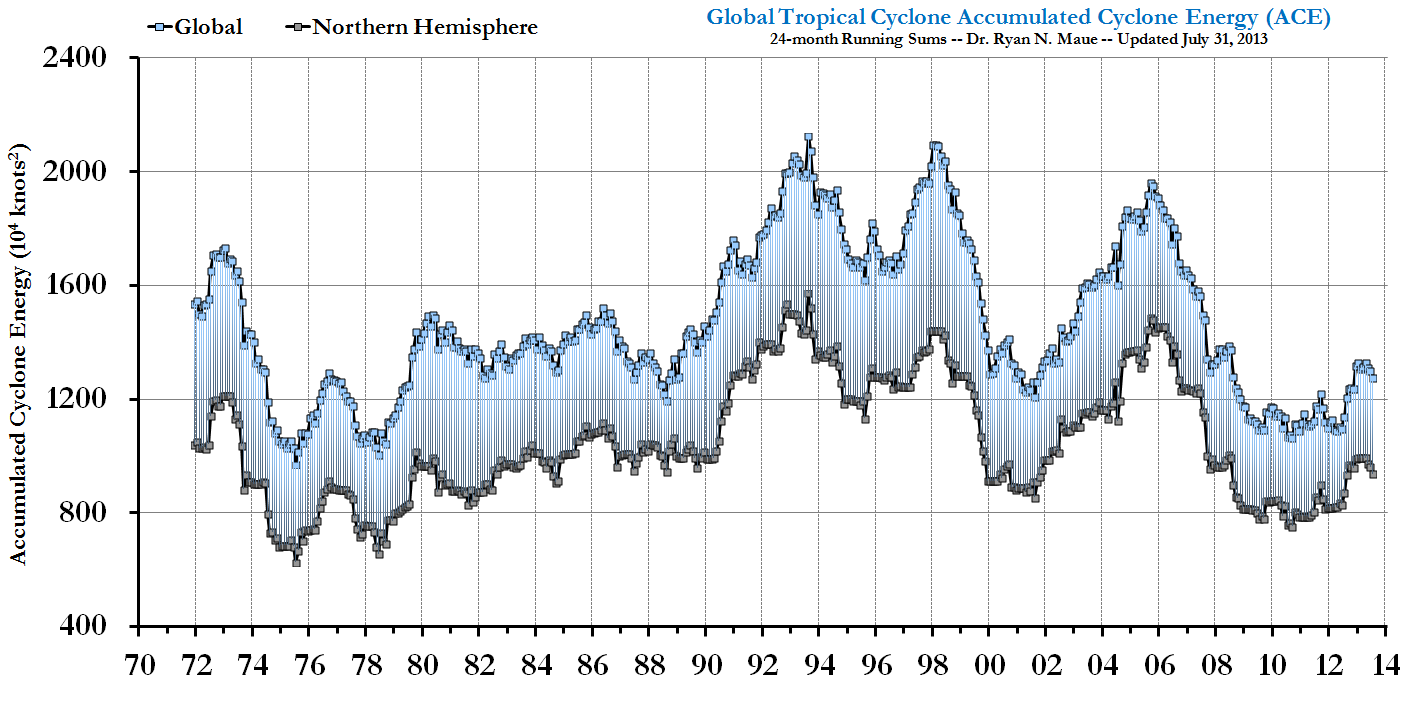
Global Warming News Flash: Global Hurricane Activity Reaches 30 Year Low!


Ryan Maue of Florida State University shows how the recent peak of hurricanes in 2005 has receeded to a 30-year low. From their web site see where global hurricane activity has "sunk to levels not seen since the 1970's."

Food for thought when we think of the media message on climate change projections.

The Days of a Document are Numbered

SharePoint Joel writes on the future of documents, and concludes their days are numbered.
What is a document? Is it that restrictive format that has a bunch of text in it with all that formatting to make it presentable? Sometimes they get corrupted. Not so much as the late eighties, but really what is a document is it the file? Is it the format? Is it the information inside of the document that is what really defines it? The .Doc and .DOCX today is simply a description of the text and layout of the information in the file.
I especially like his observation--which closely matches my own thinking:
Putting information into a .doc is like throwing something in a closet. The closet might get opened again, now put it in a folder and it's like putting it in a filing cabinet in a closet. Nest those more and more and it's likely to never be read again. SharePoint to the rescue and search might make those stats more likely to be found. Meta data and all that jazz will again increase the likelihood of it being read again.
I've learned that we don't need most documents that are created and emailed in Corporate Land. We don't need them and we don't need to invest to make, publish, read, store, or retain them.

We probably need some of the information, and that information needs to be put into places which work better. Those places are being discovered.

If it's difficult to pronounce, it must be risky

Study published on www.pubmed.gov by H. Song and N. Schwarz:
"...food additives were rated as more harmful when their names were difficult to pronounce than when their names were easy to pronounce."

They also studied the relation between the names of amusement park rides and the expectation of excitement.

Yet more proof of the irrationality of risk management by most people.

Thursday, March 05, 2009

Proud

A few weeks ago a friend of my son invited many of her school friends to a party via an internet site that promised to inform everyone. Indeed, emails were delivered to everyone. The emails contained attachments. Most everyone opened the attachments. Most everyone's computers got infected and commenced delivering mail to everyone in their contact lists in MSN.

Everyone, that is, but my son.

He knew my message of "don't open attachments in email unless you are very sure." That message was drilled into the family the earliest age. He ignored the first email about the party--probably didn't want to go anyway. He ignored the scores of emails from all his "friends" which were generated and propagated by the malware on their machines. He smiled when he told me all this.

He is, however, chagrined to report that the only way his friends and their parents could stop the deluge of outgoing emails was to shutdown the machine. Further, he hears that some of the machines will no longer work. That cuts into their collaborative game playing (Football Manager).

Tuesday, February 24, 2009

Further Great News About EasyJet - Not

My wife has submitted the following email to EasyJet Customer Services:

Never again, Easy Jet. My three hour flight from Alicante to Glasgow was torture thanks to a drunk sitting next to me. He was already hammered getting on the plane but the Stewards served him 3 double vodkas within minutes of take-off. As the abuse and taunts increased I finally hit my call-button. Only to be told they could not possible move him, but that I was free to find another seat. Difficult as the flight was close to full. Giving unlimited alcohol to these louts guarantees trouble, but profit comes first, I guess. Why is alcohol not limited? It is completely irresponsible and dangerous to fuel those already inebriated. Your comments would be welcomed.


Their reply:

We would like our Customers to have a speedy response to their enquiry, with this in mind we have looked at your email and have provided you with some suggestions for an instant answer to your question. We hope you will find these helpful.

If we have not found an immediate answer to your question, we aim to respond to your question within 12 hours.

Yours sincerely
easyJet Customer Experience Team

Monday, February 16, 2009

I was a Sucker

A few weeks back we bought four tickets on EasyJet's web site for a
week in Spain (for the sun which has not shown up yet!). I noticed
when we checked in that our trip was insured with travel insurance. "I
didn't want or buy travel insurance!" I said to no one in particular.

Additional travel insurance is a dumb purchase for most buyers and a
huge money maker for sellers. It is dumb for buyers since the risks
covered are low but cost is high. It is often in addition to already-
covered risks like death, medical, etc.

While on holiday I looked more closely at EasyJet's web site. Amongst
all the other extras they flog at the customer is travel insurance.
Nicely hidden with the default "buy" switch on. Nice one.

I was suckered.

Why can't EasyJet treat me as a customer instead of treating me like a
cow in a herd of cattle?

--rms

It Just Keeps Getting Better

Google Calendar now has a facility for synchronising a calendar in iPhone with Google's Calender. Useful.

Apocalyptic Predictions of Climate Change

The weather this winter (note that it is "winter") has been a bit cold, snowy, etc. British people tend to have a short memory about weather and forget that in winter it can get a bit cold, snowy, etc. When the snow does arrive, there is such uniform shock and surprise that the government didn't do anything it. Weather like this also generates yet more articles in the media about this weather is all proof of the apocalyptic future caused by climate change.

Experts at Britain's top climate research centre have launched a blistering attack on scientific colleagues and journalists who exaggerate the effects of global warming.

The Met Office Hadley Centre, one of the most prestigious research facilities in the world, says recent "apocalyptic predictions" about Arctic ice melt and soaring temperatures are as bad as claims that global warming does not exist. Such statements, however well-intentioned, distort the science and could undermine efforts to tackle carbon emissions, it says.

In an article published on the Guardian website, Dr Vicky Pope, head of climate change advice at the Met Office, calls on scientists and journalists to stop misleading the public with "claim and counter-claim".


Finally some science gets attention in the media. While the above was in the Guardian for which I have a lot of respect, I do note it appears as if this news is not being reported by the BBC (or at least as far as I've noticed).

Climate change politics in the UK centres around the Kyoto Treaty, which itself is focused around wealth creation and redistribution.

Tuesday, February 10, 2009

Sometimes "What We All Think" Could be (Maybe) Not True

Wal-Mart is a political issue. People and organisations line up on both sides of the "issue".

Charles Platt, a former senior writer from Wired, has published a fascinating story in the NY Post about his experience of actually working at Wall-Mart.

Based on my experience (admittedly, only at one location) I reached a conclusion which is utterly opposed to almost everything ever written about Wal-Mart. I came to regard it as one of the all-time enlightened American employers, right up there with IBM in the 1960s. Wal-Mart is not the enemy. It's the best friend we could ask for.


We have other big political issues in our world: The Economy. The Climate. The Environment. Families. War. What can we learn from Wall-Mar?

Sunday, February 08, 2009

This Rings True to Me. Technology.

Susan Cramm writes at the Harvard Business Review "Don't Use Technology to do Dumb Things". See http://blogs.harvardbusiness.org/cramm/2009/02/dont-use-smart-technologies-to.html.

Technology can help us do almost anything - for better and worse. In considering the options, leaders need to ask the question: "I know we can do it, but should we?"


I particularly resonate with the following two principles she gives as they match my experince and I notice that few others actually do this:

1. Increase breadth of impact by pushing technology as far down in the organization as possible.
2. Increase the depth of impact by implementing features that simultaneously serve individual and business interests.

Saturday, February 07, 2009

The War on Terrorism Continues ...

Now photographers are the risk. From the British Journal of Photography regarding new laws in the UK:

The relationship between photographers and police could worsen next month when new laws are introduced that allow for the arrest - and imprisonment - of anyone who takes pictures of officers 'likely to be useful to a person committing or preparing an act of terrorism'.

Tuesday, January 27, 2009

NYTimes: Coffee Linked to Lower Dementia Risk

This explains my mental health and all other good things catalysed by my daily coffee intake.

Sunday, January 25, 2009

Cleaning Air Has Led to Climate Warming in Europe

A European study of the impact of cleaner, and thus "clearer" air, due to the concerted effort to reduce air pollution has led to additional "warming in Europe"

The researchers found this clearing of the air in the past 30 years may have amplified the warming of Europe.

They report their findings in the journal Nature Geoscience.

The research was led by Robert Vautard at the Atomic Energy Commission, Gif sur Yvette, France.

Since the 1970s, European temperatures have risen by about half-a-degree Celsius per decade.

This warming rate is faster than the global mean change (roughly equal to 0.18C per decade) and the trend averaged over all the Earth's land (roughly equal to 0.27C per decade) during the same period.

The regional climate models used by scientists have failed to simulate the European experience, say Vautard and colleagues; and they point to legislation that has cleaned up Europe's air as the probable cause.


Begs the question if we really know enough about the atmosphere to base our actions primarily on the results of atmospheric modeling.